ceremony · Sep 13, 2026
Building a Ceremony Arch That Doesn't Look Like Scaffolding
Most flower arches fail in the same way: the frame shows through. A step-by-step look at how we hide the structure and let the flowers do the talking.
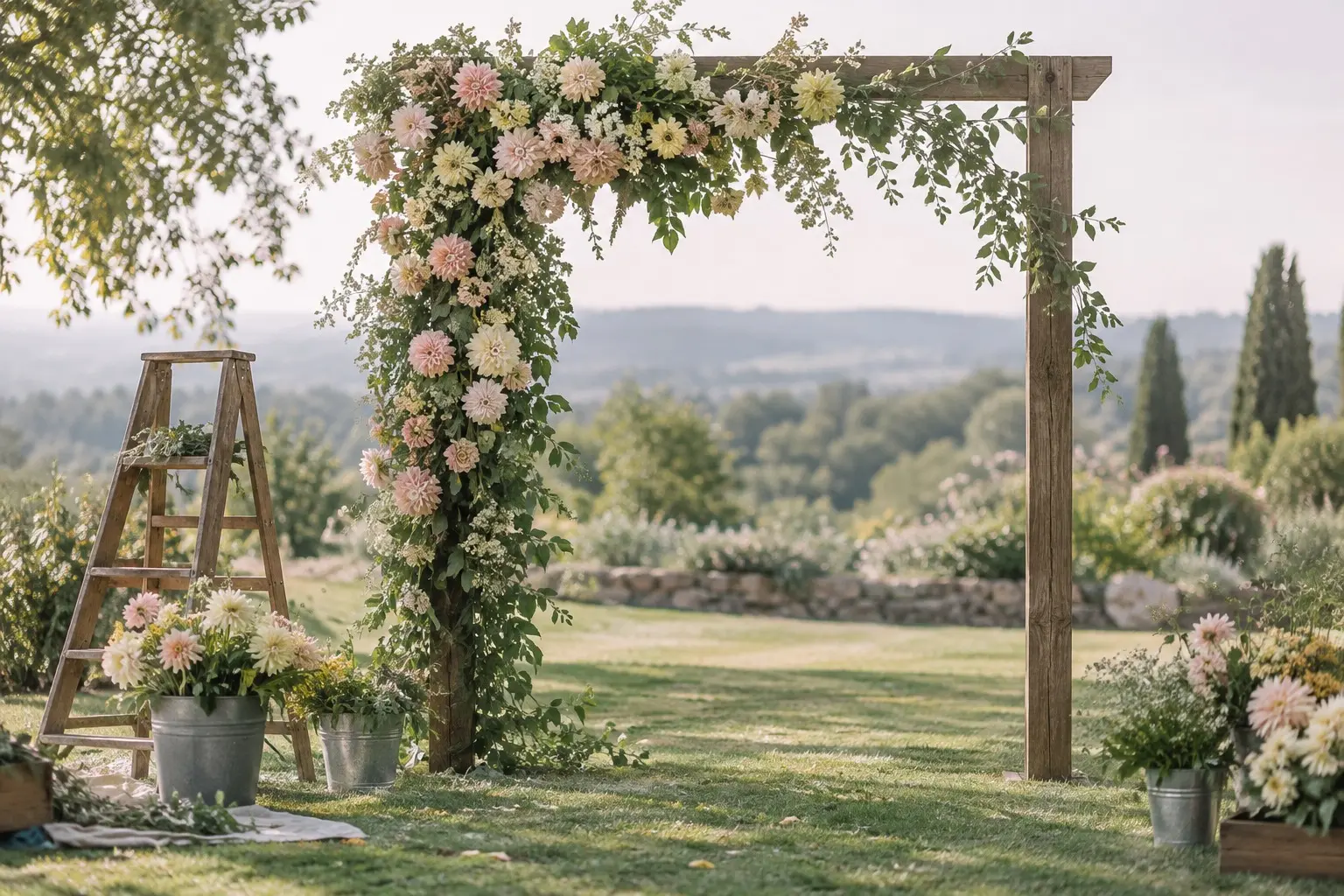
You can always spot a bad ceremony arch from the back row. There's a visible metal pole, a floral bulge on one side and bare wood on the other, and the whole structure seems to be apologising for something.
A good arch is quieter. It looks as if it grew there. Here's how we get from an empty frame to that.
Start with the frame
The structure should match the setting. A rustic orchard asks for a wooden frame with softly weathered edges. A modern venue can carry a clean, simple hoop. Either way, I check three things before a single stem is cut: is it stable on that ground, is it the right width for the people standing under it, and where will the light fall?
An arch that wobbles in a light breeze is an arch you'll worry about all afternoon. We weight the base with sandbags or stakes, whichever the ground allows, and test it by leaning on it.
Build the base layer
The first layer is foliage. It covers the frame and sets the shape: cedar, eucalyptus, olive, ivy, whatever the season gives us. We tie it in with paper-covered wire and a bit of patience, working from the ground up so the weight sits low. This layer needs to be generous. Skimp on it and everything above looks stuck on.
Moss and chicken wire hold the focal clusters. That's our alternative to floral foam. The water source is tucked behind the greenery in small tubes, so the blooms last through the ceremony.
Add the flowers in groups
Flowers go in clusters of three, five and seven, never in a neat line. I weight one side more than the other, so the eye travels across the structure rather than resting in the middle. The heaviest cluster is usually at the upper left corner, where the light catches. Smaller flowers trail down, and a few stray stems escape, deliberately.
The principle is the same as in a bouquet: loose, but intentional. The wildness has been measured.
Hide the mechanics
This is the step that separates a good arch from a good photograph of one. Zip ties get covered. Wires get wrapped. Anything shiny gets painted dull. Walk around the back and look at the whole thing from where the guests will sit, because that's the side they'll watch for twenty minutes.
The day itself
We install early, four hours before the ceremony, and return at the last minute to refresh anything the sun has tired. Summer arches get a mist of water. Autumn ones get a second look for dropped petals. At the end, we take everything apart and compost the flowers.
Not every couple needs an arch. Some of the best ceremonies we've done had a single tree. If you want to know how to keep the flowers fresh once they're in place, the next piece covers it.
No comments yet
Comments are open. Have a thought or a question? Share it below.